The Quiet Power of Restorative Yoga: Benefits and How It Differs from Yin
In a culture that prizes doing over being, restorative yoga offers something radical: permission to rest. There’s no flowing, no building heat, no working toward a peak pose. Just support, stillness, and the slow unwinding of a nervous system that rarely gets the chance to fully let go.
If you’ve ever left a restorative class feeling like you exhaled for the first time in weeks, you already understand why this practice has such devoted followers. Here’s a closer look at what it offers — and how it compares to its close cousin, yin yoga.
What Is Restorative Yoga?
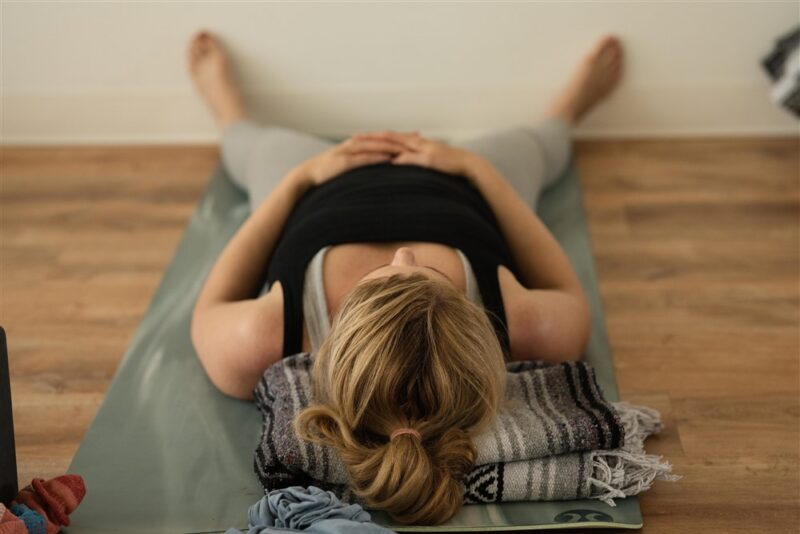
Restorative yoga is a slow, supported practice built around a small number of passive poses, often just four or five in a full class. Each pose is held for five to twenty minutes, fully supported by props — bolsters, blankets, blocks, and straps — so the body doesn’t have to work at all. The goal isn’t to stretch deeply or build strength. It’s to give your body permission to do absolutely nothing, so your nervous system can shift into a genuine state of rest.
Think of it less as exercise and more as active relaxation: a practice, not a workout.
The Benefits of Restorative Yoga
1. It activates your parasympathetic nervous system. Most of us spend our days in a low-grade state of sympathetic activation — the “fight, flight, or freeze” mode that keeps us alert, productive, and often quietly stressed. Restorative yoga’s extended, supported holds signal safety to the body, helping shift you into the parasympathetic “rest and digest” state where deep healing actually happens.
2. It reduces stress and anxiety. Because the poses are fully supported, there’s little effort required, which allows the mind to settle. Many people find restorative yoga meaningfully lowers cortisol levels and quiets the racing, anticipatory thinking that fuels anxiety.
3. It supports better sleep. The same nervous system shift that calms anxiety during the day also prepares the body for deeper, more restful sleep at night. Restorative yoga is often recommended for people struggling with insomnia or chronically poor sleep quality.
4. It helps process emotion. When the body finally stops moving and defending, emotions that have been pushed aside often surface. This can feel unexpectedly tender — even a little uncomfortable — but it’s part of the practice’s quiet power. Restorative yoga creates a safe container for feeling what’s actually there.
5. It’s accessible to nearly everyone. Because poses are fully supported and there’s no strength or flexibility requirement, restorative yoga welcomes bodies of every age, ability, and condition. It’s often used alongside physical therapy, chronic illness management, and recovery from injury or burnout.
6. It counterbalances a busy, achievement-oriented life. If your days (or your other workouts) are about pushing, restorative yoga is about receiving. It’s a direct antidote to the chronic overdrive so many of us live in without realizing it.
Restorative Yoga vs. Yin Yoga: What’s the Difference?
Yin and restorative are often mentioned in the same breath — both are slow, both use props, both involve long holds. But they’re built around different goals, and understanding the distinction can help you choose the right practice for what your body needs.
| Restorative Yoga | Yin Yoga | |
|---|---|---|
| Primary goal | Deep rest and nervous system regulation | Stretching connective tissue and improving mobility |
| Muscle engagement | None — the body is fully supported and passive | Muscles are relaxed, but there’s often a gentle edge of sensation or stretch |
| Prop use | Extensive — props fully support the body so there’s zero effort | Moderate — props help you settle into a stretch, not eliminate all sensation |
| Hold times | 5–20 minutes, sometimes longer | 3–5 minutes typically |
| Sensation | Comfortable, supported, no strain | A mild, sustained stretch — sometimes described as “sweet discomfort” |
| Best for | Stress relief, burnout, nervous system recovery, deep rest | Improving flexibility, joint mobility, and targeting fascia and connective tissue |
The simplest way to remember it: yin invites a gentle edge of sensation in service of the tissues; restorative removes sensation entirely in service of rest. In yin, you’re doing a small amount of work to create change in the body. In restorative, you’re doing no work at all — the entire point is to let the body be held.
Both practices are deeply valuable, and many people benefit from both, depending on what they need on a given day. If you’re feeling stiff and want more mobility, yin may be the better fit. If you’re feeling depleted, overstimulated, or emotionally frayed, restorative is often exactly what the body is asking for.
Is Restorative Yoga Right for You?
If you find yourself running on empty, if rest feels unfamiliar or even uncomfortable, or if your nervous system rarely gets a true break — restorative yoga might be one of the most valuable hours you spend all week. It won’t build strength or flexibility in the way other practices might. Instead, it offers something just as essential: the reminder that you don’t always have to earn rest. Sometimes, you simply need to receive it.
We’d love to welcome you to a restorative class at Tuladhara Yoga — bring a blanket, bring your tired nervous system, and let yourself be held for an hour.